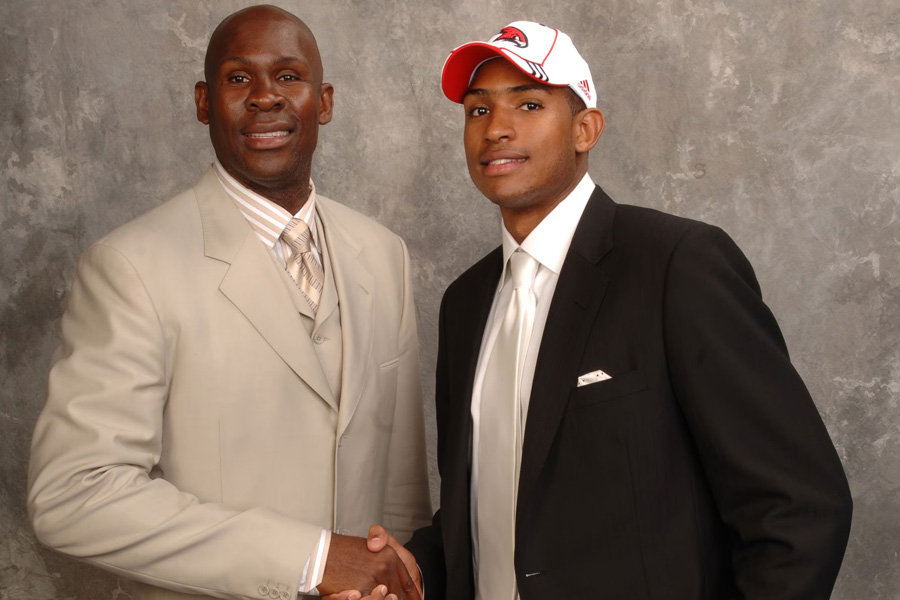
| Basic Information | Details |
|---|---|
| Full name | Alfredo William Horford |
| Known as | Tito Horford |
| Birth date | January 19, 1966 |
| Birthplace | La Romana, Dominican Republic |
| Nationality | Dominican |
| Height | 7 feet 1 inch |
| Primary position | Center |
| NBA draft | 1988, 39th overall |
| NBA teams | Milwaukee Bucks, Washington Bullets |
| Best known for | First Dominican-born player in the NBA |
| Children publicly identified | Al, Jon, Josh, Anna, Maria, Maíra |
| Former spouse | Arelis Reynoso |
A Tall Figure Who Helped Open a Door
I see Tito Horford as more than a former basketball player. I see him as a doorway. Before the family name became familiar in NBA arenas, before Al Horford became a champion and a veteran leader, Tito was already forcing a path through a sport and a world that were not built for many players from the Dominican Republic.
Born on January 19, 1966, in La Romana, he grew into a 7 foot 1 center with a presence that felt bigger than the box score. His story has the shape of a long climb. It began in the Dominican Republic, crossed into the United States through high school and college basketball, and then reached the NBA in 1988 when the Milwaukee Bucks drafted him with the 39th overall pick. That moment mattered far beyond one draft night. It made him the first Dominican-born player in the NBA, a milestone that still shines like a bright marker in Dominican sports history.
His name is tied to basketball, but his story is also tied to migration, adaptation, fatherhood, and endurance. I think that is what makes Tito Horford so compelling. He was not just a player passing through the league. He was a bridge.
From La Romana to the College Spotlight
Tito Horford’s climb was messy. It was sharp and dramatic, like a rock road. He started out in baseball in the Dominican Republic, but his height made him an interior force in basketball. That turn altered everything.
He gained national fame at Houston’s Marian Christian High School. A significant recruit and imposing center, he was one of the best big men of his time. After multiple collegiate stops, he became a major interior player at the University of Miami. Miami noticed his stature, rebounding, and shot-blocking as rare skills and made him a star.
His perseverance, which is sometimes overlooked, shines out. Although talented, he had to constantly moving, adjusting, and proving himself in new areas. Movement like that might tire you out. Tito persisted.
NBA Career and Professional Achievements
Tito Horford’s professional career was relatively brief in the NBA, but its importance was huge. In 1988, the Milwaukee Bucks selected him, and he became a historical first for Dominican basketball. He later played for the Washington Bullets as well.
His NBA years were part of a larger career that also extended overseas and into other basketball markets. That broader journey matters because it shows the way many international players built careers in an era before global basketball was as open and visible as it is now. Tito was part of that earlier generation of international big men who had to find their space wherever the game would hold them.
His achievements are not only about statistics. They are about symbolism and precedent. Every player from the Dominican Republic who later reached top-level basketball did so with Tito Horford standing somewhere in the background as an early marker. He helped prove that a player from La Romana could reach the highest stage.
Family as the Center of the Story
When I look at Tito Horford’s life, the family story is impossible to separate from the basketball story. The Horford family feels like a strong tree with deep roots and many branches, each one bending toward the game in a different way.
Arelis Reynoso is Tito Horford’s former spouse and the mother of Al Horford. She is a central figure in the family story because she helped shape one of the NBA’s most respected players while staying connected to the family’s Dominican identity. Their marriage ended in divorce in 1989, but the family bond continued through their children.
Al Horford is Tito’s best known son. He became an NBA All-Star, an NBA champion, and one of the most reliable big men of his generation. I see Al as the family name lifted onto a wider stage. Tito’s influence is present there, not only in genetics, but in the culture of discipline and basketball identity that surrounds the Horford household.
Jon Horford is another of Tito’s sons. He played college basketball and remained visible in the family’s athletic lineage. The father son link is important here because Jon represents the continuation of the basketball line in a more modest but still meaningful way.
Josh Horford is also identified as Tito’s son. He adds to the image of a family where the sport is not a single branch but a whole canopy.
Anna Horford is one of Tito’s daughters. She has become known in public conversation because of her visible support for the family, especially around Al’s career. She helps show that the Horford family story is not just about who played professionally, but also about who carried the family voice into public life.
Maria Horford is another daughter. She has been described in family coverage as being based in Michigan and involved in photography. That detail gives the family portrait more texture. Not every branch of the family tree points to basketball. Some point to art, work, and life beyond the hardwood.
Maíra Horford is Tito’s youngest publicly identified daughter and a professional basketball player herself. I find her especially interesting because she shows that the family legacy did not stop with the first generation of sons. It moved outward, crossing into women’s basketball and international play.
Kelly Horford is Tito’s brother and another basketball connection within the family. He played college basketball at Florida Atlantic University. That detail makes the Horford family feel less like a single isolated success and more like a network of shared athletic instinct.
Public Image and Later Life
Tito Horford’s public image is formed by his basketball history and family eldership. He attends sports to honor Al and maintain the family story. He posts birthday tributes and team celebrations on social media as a proud father and supporter.
That role counts. After playing, Tito remains quieter and warmer than other athletes. He’s the kind of parent figure who watches the following chapter from the sideline, smiling.
His longevity may be due to that. Not only his court performance is remembered. Remembered for what followed and came through him.
Extended Timeline of Tito Horford
1966: Tito Horford is born in La Romana, Dominican Republic.
Early 1980s: He transitions from baseball to basketball and begins developing as a towering center.
1982: He moves into the U.S. high school basketball scene in Houston and becomes a major prospect.
1985: He gains national attention as a top high school player.
1986: He joins the University of Miami and becomes a major rebounding and interior presence.
1988: The Milwaukee Bucks draft him, and he becomes the first Dominican-born player in the NBA.
Late 1980s to early 1990s: He continues his pro career in the NBA and abroad.
1990s and beyond: He becomes a father to a basketball family that includes Al, Jon, Josh, Anna, Maria, and Maíra.
2010s and 2020s: He remains a visible figure in the background of Al Horford’s NBA journey and championship life.
FAQ
Why is Tito Horford important in basketball history?
He is important because he became the first Dominican-born player in the NBA. That made him a pioneer, not just a participant. He helped open a path for future players from the Dominican Republic.
Who are Tito Horford’s children?
Publicly identified children include Al Horford, Jon Horford, Josh Horford, Anna Horford, Maria Horford, and Maíra Horford. Each one adds a different thread to the family’s story.
Who was Tito Horford’s spouse?
Arelis Reynoso is identified as Tito Horford’s former spouse. She is also the mother of Al Horford and a key figure in the family’s early story.
What teams did Tito Horford play for in the NBA?
He played for the Milwaukee Bucks and the Washington Bullets. His NBA career was brief, but historically important.
What is Tito Horford best known for outside his playing career?
He is best known as the father of Al Horford and as the foundation of a family deeply connected to basketball. His role as a parent and elder in the Horford family is a major part of his legacy.